
Are Chew Toys Safe for Dogs? A Complete Safety Guide
Chewing is one of the best outlets you can give your dog, but grabbing any toy labeled "chew toy" off the shelf doesn't automatically mean it's the safest choice for your dog specifically. Material, size, and your dog's own chewing style all play a part in whether a toy holds up the way it should. Here's how to choose with confidence and know when it's time for a new one.
What Makes a Chew Toy Safe?
A safe chew toy holds up to your dog's chewing style without breaking into pieces your dog could swallow. The American Animal Hospital Association generally points back to matching a toy to your dog's chewing style and size, rather than any single hardness level being universally right or wrong. What holds up well for one dog's teeth and jaw strength may be too much, or not enough, for another's.
No chew toy is completely immune to wear. Even durable options break down over time, so "safe" really means a combination of the right material, the right size for your dog, and consistent supervision, not a guarantee that a toy will never show wear.
Safest Chew Toy Materials for Dogs
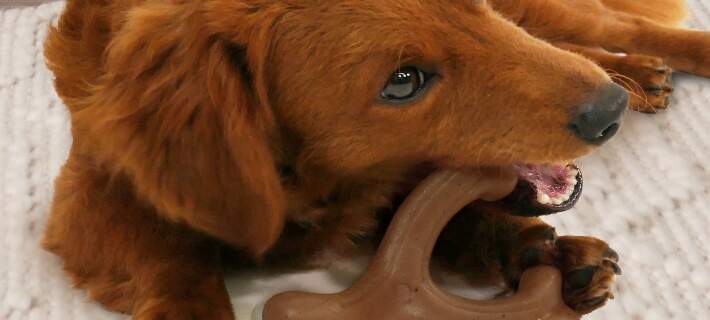
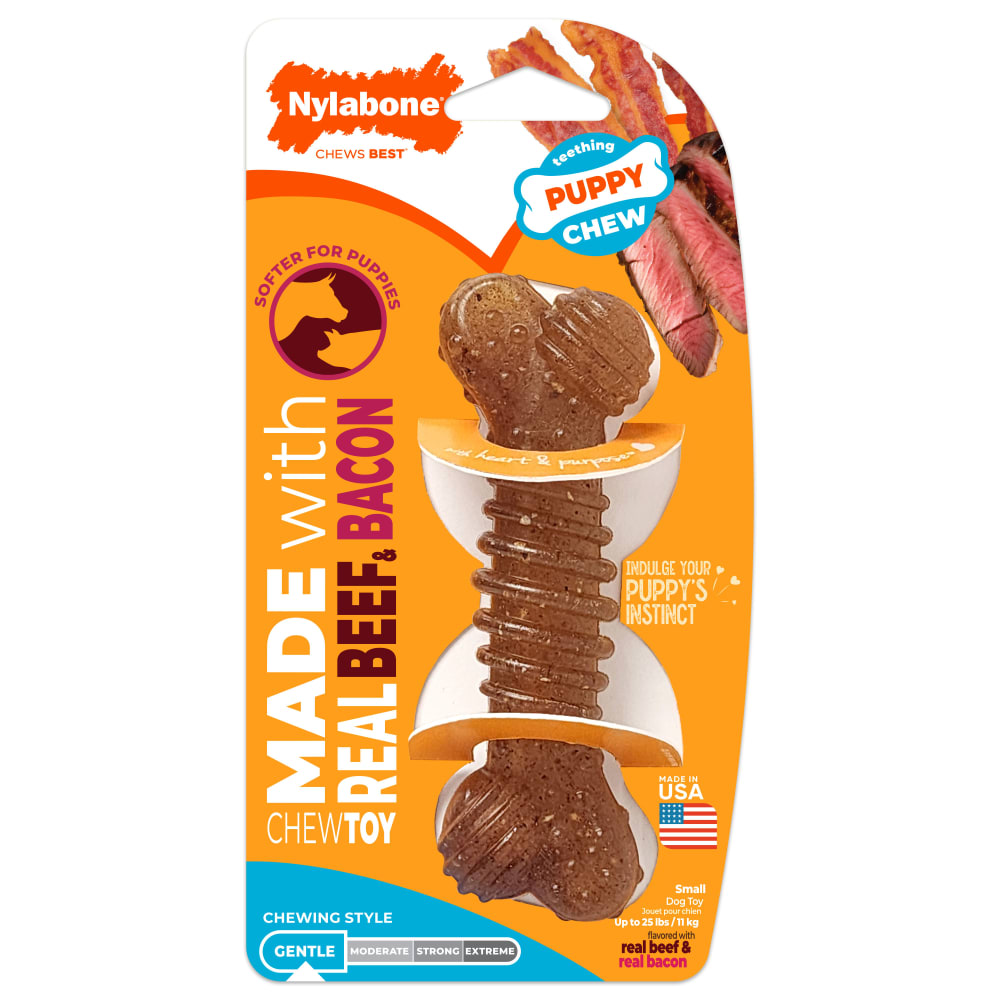
Material matters as much as shape. Solid rubber and dense nylon are generally considered safer choices for dogs with a firm, established chewing style, since they resist tearing and don't easily fragment into swallowable pieces. Teething puppies are the exception: their still-developing teeth and gums do better with a softer, more giving material built specifically for that stage, rather than the denser options made for adult chewers.
Steer clear of toys with small removable parts, like plastic eyes, squeakers, or bells. Dogs love working these loose, but they're a common reason chew toys end up causing trouble. If your dog is an enthusiastic chewer, a toy built as one solid piece is the safer bet.
Sizing and the Choking Risk
Size plays a bigger role in chew toy safety than many pet parents expect. Veterinary guidance on choosing chew toys consistently points to sizing as one of the first things to check: a toy
that's too small for your dog's mouth is easier to swallow whole, which is a serious choking risk regardless of how durable the material is. As a general rule, a chew toy should be large enough that your dog can't fit the entire thing in their mouth.
This becomes especially important as puppies grow. A toy that fit safely at four months old may be dangerously small by the time your dog reaches their adult size, so it's worth reassessing fit every few months during growth.
When to Replace a Chew Toy
Every chew toy has a lifespan, and knowing the signs it's time for a new one matters more than the toy's original price tag or durability rating. Watch for:
- Visible cracks or splitting, which create sharp edges and weak points
- Large pieces coming loose, since these can become choking hazards
- Flattened or worn-down texture, which usually means the toy is no longer holding up the way it should
- A noticeably smaller toy, since ongoing wear can bring a toy down to an unsafe size over time
If you're ever unsure whether a toy is still safe, it's better to replace it than to wait and see. Checking your dog against a dog size chart before buying a replacement helps make sure the next toy fits from the start.
Why Supervision Always Matters
Even a well-matched, durable toy is safest when you're around to see how your dog is actually doing with it. Watching a new toy through its first few sessions lets you catch anything worth knowing early, whether your dog turns out to be a more intense chewer than expected, or a piece starts coming loose sooner than it should.
Nylabone's Chew Style Guide is a quick way to match a toy to how your dog actually chews, so you're starting with the right fit from day one rather than guessing.
Are There Chew Toy Safety Certifications?
Unlike human toys, there's no single government safety certification that covers dog chew toys the way there is for children's products. That said, a few markers can help you gauge quality before you buy:
- Look for chews made in the USA, since manufacturing standards and ingredient sourcing tend to be easier to verify
- Check whether the brand publishes clear feeding or use guidelines rather than leaving sizing entirely up to guesswork
When a brand is upfront about supervision requirements, replacement timelines, and size charts, that transparency itself is a reasonable signal of a safety-conscious product, often more useful day to day than a single certification would be.
What Emergency Vets See Most Often
Emergency veterinary visits related to chew toys tend to fall into a few repeat categories: gastrointestinal blockages from swallowed pieces, cracked teeth from overly hard materials, and, less often, cuts to the mouth or gums from sharp broken edges. Most of these incidents trace back to one of two root causes, a toy that didn't match the dog's size or chewing intensity, or a toy that wasn't replaced once it started showing wear.
That pattern is worth remembering: the biggest safety gains usually come from matching the toy to the dog and staying consistent about replacement, not from any single feature of the toy itself.
If Your Dog Swallows a Large Piece of a Chew Toy
The ASPCA's guidance on chew toys is direct on this point: don't wait to see how it plays out. If you notice your dog has swallowed a large piece of a toy, contact your veterinarian or an emergency animal hospital right away and describe the size and material of the piece. Watch for signs like gagging, repeated vomiting, or refusing food, and mention these to your vet immediately if they appear.
This is also a good moment to reassess the toy itself. If a piece came off easily enough to swallow, that toy likely isn't the right fit for your dog's current chewing style, and it's worth choosing something more durable or appropriately sized going forward.
FAQs on Chew Toy Safety
What are the safest chew toy materials for dogs? Solid rubber and dense nylon tend to hold up best for dogs with an established chewing style, without fragmenting. Teething puppies do better with a softer material built for that stage, rather than these firmer options. Avoid toys with small removable parts like eyes, squeakers, or bells that could be pulled off and swallowed.
How do I know when to replace a chew toy? Replace a chew toy at the first sign of cracks, large loose pieces, flattened texture, or a noticeable size reduction. When in doubt, replace it rather than wait.
Is it safe for dogs to eat their chew toys? No. Chew toys are meant to be chewed, not consumed. Swallowing pieces of a toy can cause choking or a blockage that needs veterinary attention.
What should I do if my dog swallows a large piece of a chew toy? Contact your veterinarian or an emergency animal hospital immediately and describe the piece's size and material. Watch closely for gagging, vomiting, or appetite loss.
Why does supervision matter even with a durable toy? Watching how your dog handles a new toy early on helps you catch anything worth knowing, like a piece coming loose sooner than expected, before it becomes a real problem.
What chew toys should I avoid for my dog? Avoid toys that are too small for your dog's mouth, toys with easily removable small parts, and any toy your dog has already damaged to the point of exposing sharp edges or large loose pieces.
How do I choose the right chew toy size? A safe chew toy should be too large for your dog to fit entirely in their mouth. Reassess sizing regularly as puppies grow into their adult size.
Are there safety guidelines I should follow before buying a chew toy? Match the toy to your dog's size and chewing intensity, supervise new toys until you know how your dog handles them, and replace worn toys promptly.
FOLLOW US!


