
Best Chew Toys for Aggressive Chewers: A Durability Guide
Some dogs go through toys in minutes, not months. If yours is one of them, choosing by cuteness or price won't get you far. The best chew toys for aggressive chewers come down to matching material, chew strength, and size to how your specific dog chews, not just how big or strong they look on paper. Veterinary guidance on picking chew toys consistently points back to the same basics: material, size, and supervision, regardless of how tough a toy claims to be.
What Makes a Toy Durable Enough for a Power Chewer?
Durability comes from a combination of material density and design, not just one feature. Solid rubber and dense nylon generally hold up best to sustained power chewing, resisting the kind of focused gnawing that wears down a weak point fast. Not every dog needs that density on day one, though: Nylabone also builds softer options for gentler chewers and teething puppies, so the right material really comes down to matching it to your dog's current chewing style.
Beyond material, avoid toys with thin edges or small protruding parts. Dogs can chew through these quickly, which gives an intense chewer an easy place to start working a piece loose. Size matters just as much: look for a toy substantial enough that your dog can't get their whole jaw around it, since that's a bigger factor in staying safe than any particular shape.
No toy is completely immune to wear, including the toughest options on the market. Even a well-built toy will eventually show signs of use with a truly committed chewer, which is exactly why sizing and supervision matter as much as the material itself. Think of durability as buying time and predictability rather than permanence: a well-matched toy wears down slowly and visibly, giving you a clear window to replace it before it becomes a hazard, rather than failing suddenly and without warning.
How Do Chew Strength Rating Systems Work?
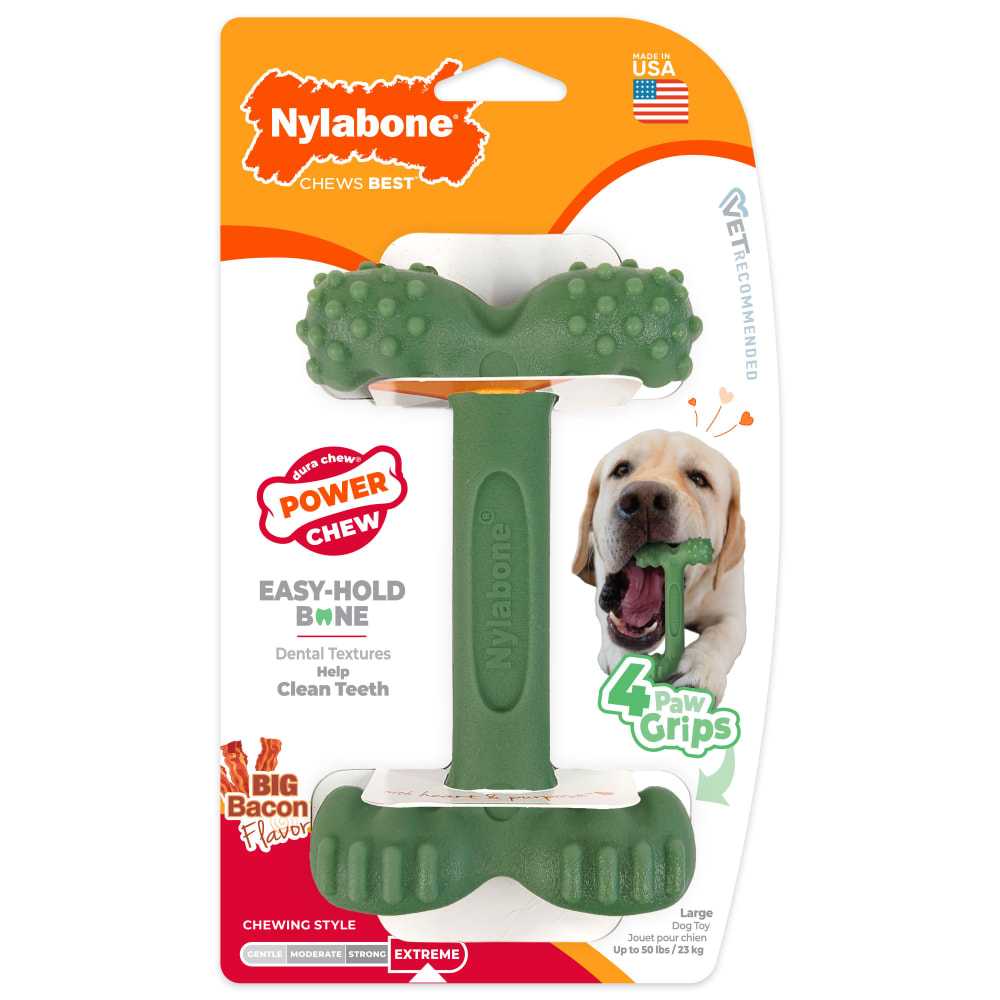
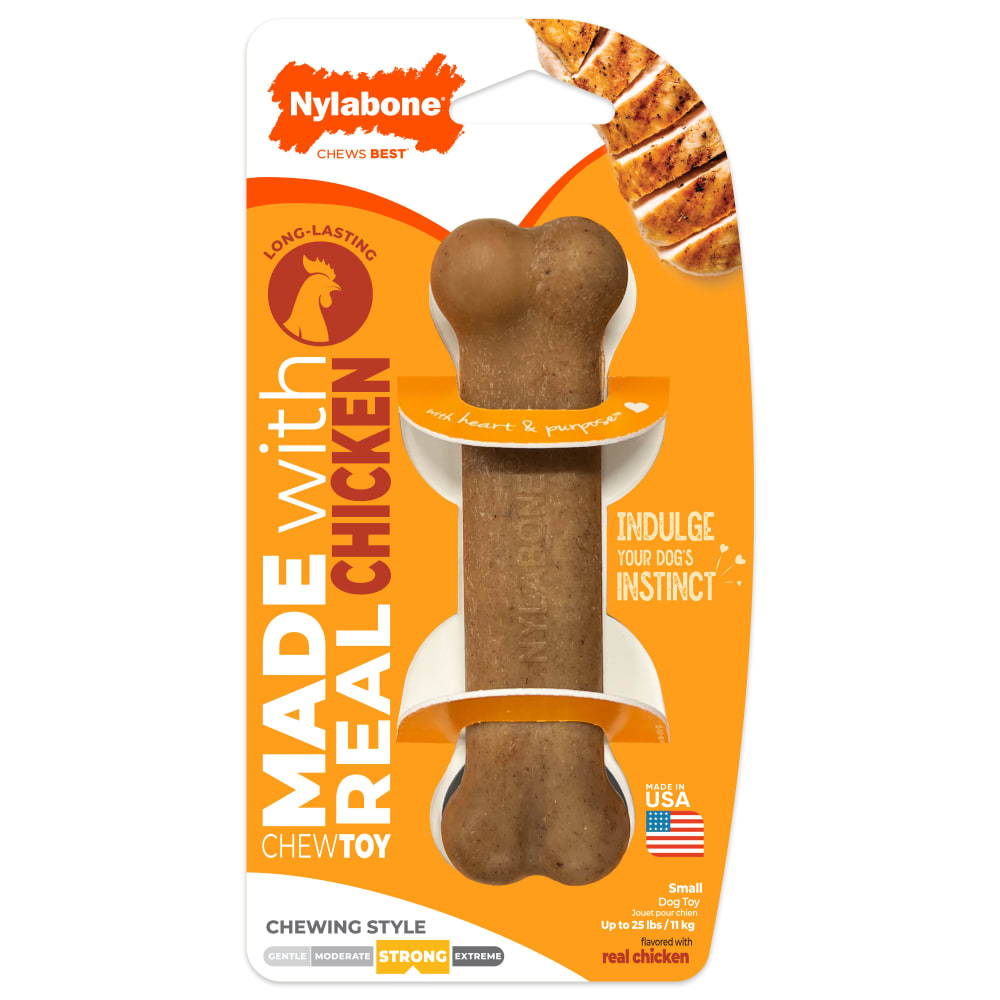
Rather than a single "durable" label, many brands break chews into tiers based on chewing intensity: gentle, average, and powerful, so pet parents can match a toy to their dog's actual behavior instead of guessing. Nylabone's lineup follows this pattern: Power Chew is built for powerful, aggressive, and extreme chewers; Strong Chew suits average chewers; Flexi Chew is designed for gentle or senior chewers who prefer some flex and give; and Puppy Chew uses Nylabone's softest material, built for teething puppies.
This kind of system exists because chew strength doesn't map neatly to breed or size alone. A chew style guide that accounts for actual chewing behavior gives a more accurate starting point than weight or breed name alone.
Power Chew vs. Strong Chew: What's the Difference?
Power Chew toys are built for powerful, aggressive, and extreme chewers, often finishing softer toys within minutes. They use denser materials designed to resist focused, repetitive gnawing. Strong Chew toys are built for average chewers, a step below the most extreme end of the scale, offering more texture variety while still holding up to regular use. Choosing between them comes down to honest observation.
Matching Chew Toys to Large and Powerful Breeds
Breeds known for strong jaws, like German Shepherds, Rottweilers, and pit bull type breeds, often need toys sized and rated specifically for that intensity. That said, jaw strength varies within every breed, so it's worth watching your individual dog's chewing style rather than assuming based on breed alone. A laid-back German Shepherd and a wound-up terrier mix can land in very different places on the chew-intensity scale, regardless of what their breed label might suggest.
For dogs over 50 pounds with a powerful chewing style, a toy sized for their weight class and rated for intense chewers gives the best combination of longevity and safety. A toy sized for a smaller dog, even a genuinely durable one, is more likely to be swallowed in pieces by a dog with a strong bite. When in doubt, size up rather than down. A toy that's slightly larger than necessary is rarely a problem, while one that's too small introduces risks.
Chews That Wear Down Safely Instead of Breaking Apart
One useful distinction is between toys that shatter into sharp fragments and toys designed to wear down more gradually at the edges. The second type generally gives you more warning before a toy becomes unsafe, since gradual wear is easier to spot during routine checks than a sudden crack.
Even with a wear-resistant design, inspect chew toys regularly for pieces that have come loose, edges that have become sharp, or any part small enough to swallow, and replace the toy once you see them.
What to Do When a Dog Destroys Every Toy in Minutes
If your dog is going through toys unusually fast, it's worth ruling out a mismatch before assuming no toy will ever work. Start with the most intense chew strength tier available, check that the size is appropriately large for your dog's mouth, and rule out toys with thin edges or protrusions that give a powerful chewer an easy starting point to tear into. Rotating in a second heavy-duty option can also help: giving one toy a rest allows you the chance to re-inspect it, and some dogs simply lose interest in a single toy faster than they wear it out, which can look like destruction but is really just boredom finding an outlet.
It's also worth watching how your dog chews, not just how fast. A dog who works methodically at one edge until it gives way needs a different toy design than a dog who chews all over a toy at once. The ASPCA recommends avoiding rapid consumption of any chew or toy piece regardless of how sturdy it's marketed to be, so if you've tried multiple toys built for powerful chewers and still aren't seeing results, a conversation with your veterinarian can help rule out anything else going on.
FAQs on Chew Toys for Aggressive Chewers
What chew toys can withstand a strong jaw? Toys built with dense rubber or nylon and rated for intense chewing hold up best. Look for a chew strength tier matched to your dog's actual chewing behavior rather than guessing by breed.
What's the best chew toy for a large breed aggressive chewer? A toy sized for your dog's weight class and rated for the most intense chewing tier available gives the best combination of durability and safety. For example, Nylabone Power Chew.
How do chew strength rating systems work? Many brands sort chews into tiers, like gentle, average, and powerful, so pet parents can match a toy to how their dog realistically chews instead of relying on size or breed alone.
Are there chew toys that wear down safely instead of breaking apart? Yes. Some designs wear gradually at the edges rather than shattering, which tends to give more visible warning before the toy becomes unsafe.
What's the difference between Power Chew and Strong Chew toys? Power Chew is built for powerful, aggressive, and extreme chewers, while Strong Chew suits average chewers. Choosing between them depends on how quickly your dog has gone through past toys.
Which chew toys have safety indicators that show when they need replacing? Toys designed to wear gradually rather than crack tend to show visible signs, like flattened texture or thinning material, before they become unsafe.
What are the best chew toys for dogs over 50 pounds? Large, powerful chewers like Nylabone Power Chew generally do best with a toy sized for their weight class and rated for intense chewing, since undersized toys are more easily swallowed in pieces.
My dog destroys every toy in minutes. What should I try? Start with the most intense chew strength tier available, confirm the size matches your dog's mouth, and avoid toys with thin edges a powerful chewer could use as a starting point.
.jpg?h=1200&iar=0&w=2400&hash=7CA9EBF55D3D804395902E2774B0B009)
FOLLOW US!


