
How to Keep Your Dog Busy: Chewing, Enrichment, and Alone-Time Strategies
A bored dog isn't just restless, they're often working through pent-up mental energy with whatever's nearby, from shoes to furniture. Figuring out how to keep your dog busy takes more than tossing over a toy. It means building a real enrichment routine that covers their mind, body, and time alone
How Much Mental Stimulation Does a Dog Actually Need?
There's no single number that fits every dog, since needs vary by breed, age, and energy level. What matters more than a specific time count is variety. A dog who gets a walk but nothing else to think about for the rest of the day is still likely to end up under-stimulated, even if they're physically tired.
What Does Mental Stimulation Even Mean?
Mental stimulation covers anything that makes your dog problem-solve, use their senses, or work for a reward, not just physical exercise. A short training session, a few minutes of sniffing on a walk, or a chew session can all count toward that daily need.
Why Do Dogs Get Bored?
Dogs evolved to spend much of their day working, foraging, tracking scents, problem-solving for food. A modern dog's life at home doesn't require nearly as much of them, and boredom is often what fills the gap. Without an outlet, that unused energy tends to come out sideways: excessive barking, digging, or chewing on things that aren't meant to be chewed.
According to the ASPCA, enrichment is about giving dogs the chance to engage in natural behaviors like sniffing, chewing, and problem-solving, rather than leaving those instincts with nowhere to go. The RSPCA describes enrichment in similar terms: it's what allows a dog to actually be a dog, engaging their senses and instincts rather than just filling time.
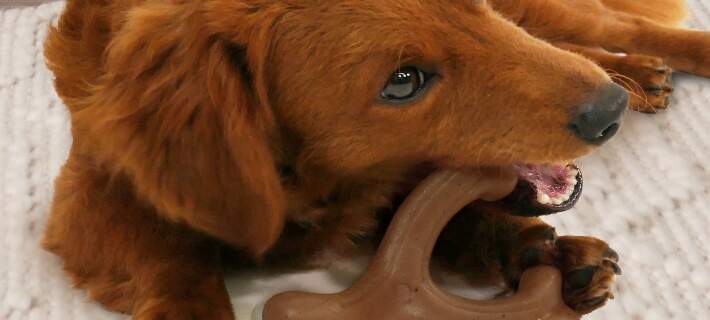
This is also why boredom and destructive chewing so often show up together. A dog who has nothing appropriate to chew on will often find something inappropriate instead, not out of misbehavior, but because the underlying need for chewing hasn't gone anywhere.
Does Chewing Provide Mental Stimulation?
That makes chewing one of the simplest enrichment tools available. It requires no training, fits naturally into a dog's existing routine, and gives you something worth watching together during downtime.
Building an Enrichment Routine That Actually Sticks
A good enrichment routine doesn't need to be complicated. It needs to be consistent and varied enough that your dog isn't doing the exact same thing every single day. A simple structure looks like:
- Morning: a walk with time to sniff, not just a fast-paced loop around the block
- Before you leave and right when you're back: a short, supervised chew session on both ends of the day helps take the edge off the transition
- Evening: a short training session or interactive play to reconnect after the day
Rotating which chews and toys are available also keeps things interesting. A toy that's been out for weeks loses its novelty, while bringing it back after some time away can make it feel new again.
How Often Should You Rotate Toys and Chews?
Dogs, like people, habituate to things they see constantly. Keeping every toy out all the time often means your dog stops noticing most of them. Many pet parents find that rotating a portion of the toy collection every week or two, keeping a few favorites always available and swapping the rest, keeps engagement higher than leaving everything out at once.
Combining Chewing With Training, Sniffing, and Play
The most effective enrichment routines mix categories rather than relying on one activity alone. Pairing a chew session with a calm settle cue teaches your dog to relax with something to do.
Scattering kibble in the grass for a sniffing session before a chew adds a foraging element. A five-minute training session focused on a new cue works a different kind of mental muscle than a chew does, and alternating between the two throughout the week keeps your dog from getting too used to any single activity.
None of this needs to be elaborate. The goal is variety, not complexity, and even small additions, like feeding a portion of dinner from a puzzle feeder instead of a bowl a few times a week, can meaningfully add to your dog's mental workload without adding much to your own.
Keeping Dogs Occupied During Alone Time
Time alone is often when boredom shows up most, since there's no one around to redirect restless energy. Chewing should always happen with you around, so rather than leaving a chew with your dog for the whole stretch, the most useful approach is a short, supervised chew session right before you leave and again as soon as you're back. Doing this on both ends of the day gives your dog a chance to burn off restless energy and settle before the transition, rather than ramping up right as the door closes or the moment you walk back in.
It also helps to separate genuine boredom from stress and anxiety. A bored dog usually settles once given something to do, and tends to relax noticeably once engaged. A dog showing signs like pacing, drooling, or attempting to escape when left alone may be dealing with something more than boredom, and that's worth discussing with your veterinarian or a certified trainer rather than addressing with enrichment alone.
That said, enrichment can still play a supporting role even when anxiety is part of the picture. A calm, supervised chew session as part of a consistent departure routine, done well before you actually leave, can help take the edge off the transition, though it works best alongside guidance from a professional rather than as a standalone fix for anxiety-driven behavior.
FAQs on Keeping Your Dog Busy
How much mental stimulation does a dog need each day? It varies by breed, age, and energy level, but most dogs benefit from a mix of physical activity and problem-solving tasks spread throughout the day rather than one long burst.
Why do dogs get bored? Dogs evolved to spend their day working for food and engaging their senses. Without that natural outlet, unused energy often shows up as unwanted behaviors like chewing or digging.
Does chewing provide mental stimulation for dogs? Yes. Chewing is a repetitive, focused activity that occupies a dog's attention and can have a calming effect, especially in a supervised session.
How can I keep my dog occupied while I'm at work? Give a short, supervised chew session right before you leave and again as soon as you're back, rather than leaving a chew with your dog for the day. Bookending the workday this way helps them burn off energy and settle on both ends, without needing to be left alone with anything to chew.
How often should I rotate my dog's toys and chews? Every week or two works well for most dogs. Keep a few favorites always available and rotate the rest to maintain interest.
Should dogs have access to all of their toys at once? Not necessarily. Leaving everything out constantly can reduce novelty. Rotating a portion of the collection tends to hold attention better.
How can I tell if destructive behavior is from boredom or anxiety? Bored dogs usually settle once given something engaging to do. If your dog paces, drools, or tries to escape when left alone, talk to your veterinarian, since that may point to something beyond boredom.
When does separation-related behavior need professional help? If your dog shows signs of distress specifically tied to being left alone, panicking, destructive escape attempts, or extended vocalizing, it's time to loop in your veterinarian or a certified trainer rather than relying on enrichment alone.

FOLLOW US!


